

Insurance Careers, Captive Agent, Independent Broker
Part 3: Captive Agent vs Independent Broker – Which Path Fits You?
Choosing between becoming a captive insurance agent or an independent broker is one of the most important early career decisions in the industry. Both paths can lead to success, but they differ in structure, freedom, and day‑to‑day reality. This guide walks through the key trade‑offs so you can decide which model best fits your goals and personality.
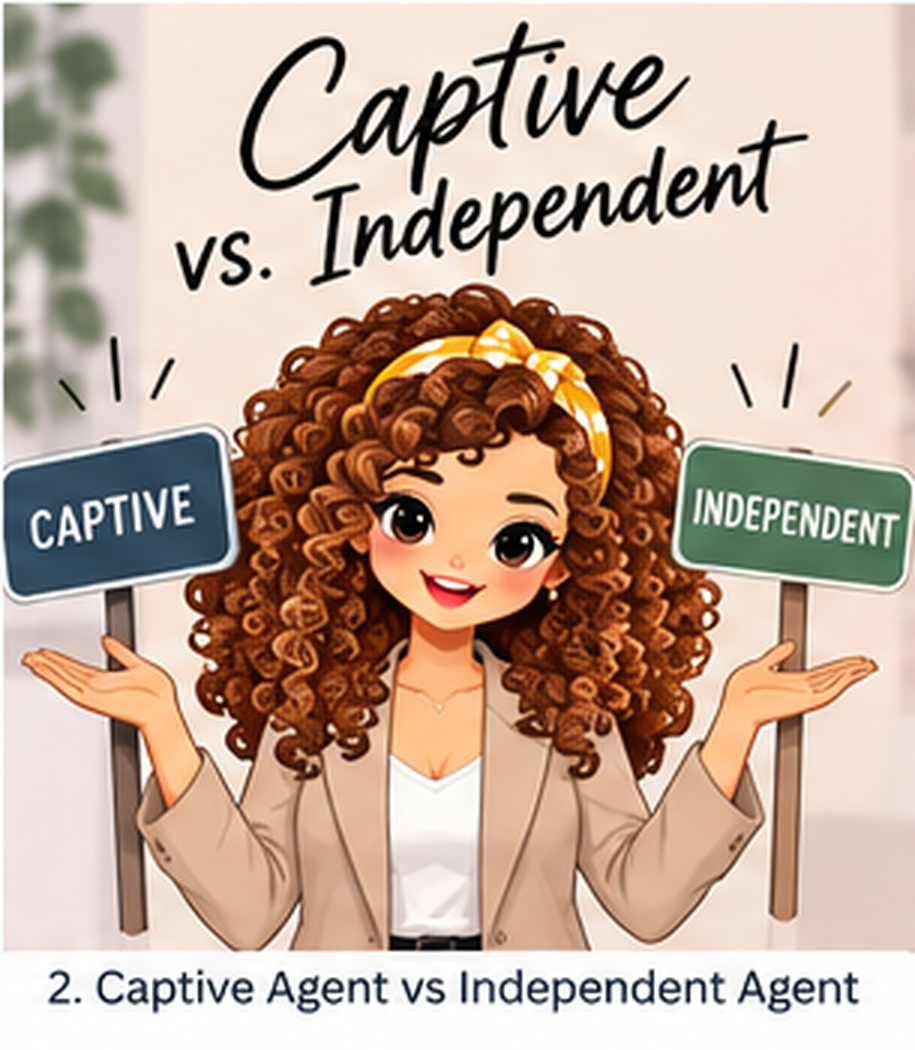
Captive Agent vs Independent Broker: The Core Difference
At the highest level, the distinction is simple: captive agents represent one insurance company, while independent brokers represent multiple companies. That single difference shapes everything from your daily conversations with clients to how you are paid and supported.
Number of Companies Involved and Product Options
As a captive agent, you typically work with a single parent company (or a small family of related brands). Your entire product shelf—auto, home, life, commercial, or health—comes from that carrier. The upside is deep familiarity: you become an expert in one company’s offerings, pricing structure, and underwriting rules.
An independent broker, on the other hand, can partner with many insurers. That means a broader menu of product options and price points for clients. You can shop around on their behalf, mixing and matching carriers to fit different needs or budgets. For consumers who value comparison and customization, this can be a major advantage.

Captive agents go deep with one carrier; brokers span many to widen choice.
Flexibility in How and What You Sell
Flexibility is often where the two paths feel most different. Captive agents usually follow company-defined goals and priorities. You may be encouraged to focus on specific lines of business or campaigns, with set processes for quoting, underwriting, and service. This structure can be comforting if you prefer clear expectations and a defined playbook.
Independent brokers generally enjoy more freedom to design their business . You can choose which markets to serve, which carriers to emphasize, and how to package solutions. That flexibility can be empowering, but it also demands self-discipline, strategic thinking, and comfort with ambiguity.
Lead Generation: Who Finds the Clients?
No matter which path you choose, you will sell. The question is how much help you receive in finding people to talk to.
Many captive agencies benefit from brand recognition and corporate marketing. The company’s advertising, online presence, and referral programs can generate inbound leads. Some captive models provide shared leads, walk‑in traffic, or centrally scheduled appointments, especially in established offices. You will still prospect, but you may not be starting entirely from scratch.
Independent brokers are usually more responsible for their own pipeline . You are the brand, so you must build awareness, create marketing campaigns, network, and nurture referrals. For entrepreneurial self-starters, this is exciting. For those who prefer a steady stream of company-generated leads, it can feel daunting.
Support Systems, Training, and Back-Office Help
One of the biggest perceived advantages of the captive model is built-in support. Large carriers often provide:
Structured training and licensing assistance
Sales scripts, marketing materials, and compliance guidance
Technology platforms for quoting, CRM, and policy service
Independent brokers also receive training and tools, but these often come from multiple sources: general agencies, aggregators, carrier reps, or industry associations. You may need to piece together your own tech stack and back-office processes. This can lead to a highly tailored operation, but it requires more decision‑making and management on your part.
📌 Key Takeaway: Captive models tend to centralize support and systems, while independent models distribute them across several partners—and put more control in your hands.
Matching the Model to Your Goals, Personality, and Work Style
Importantly, neither model is “better” for everyone. Your ideal path depends on what you want from your career and how you prefer to work day to day.
If you value structure, brand strength, and guided training, a captive role may feel like a safer, more supported starting point.
If you crave flexibility, variety, and entrepreneurial control, the independent broker route may align better with your ambitions.
Take an honest look at your goals, personality, and work style. Are you energized by building a business from the ground up, or do you prefer plugging into an established system? Do you enjoy comparing options across many companies, or would you rather master one carrier’s lineup and tell that story confidently?
Final Thoughts: The “Right” Choice Is the One That Fits You
The captive agent and independent broker models each offer compelling advantages—and real trade‑offs—in company relationships, product options, flexibility, lead generation, and support systems. There is no universal best path. The right choice is the one that aligns with who you are and where you want your career to go.
Before committing, talk to professionals working successfully in both environments. Ask about their daily routines, challenges, and wins. Then choose the model that matches your own goals, personality, and preferred work style—and commit fully to making it work for you.
Insurance can absolutely change your life—but it's still a profession that requires work, consistency, and patience.